Differences between the 4 string, 5 string, and 6 string banjo
When beginners decide they are ready for the banjo journey, many are left wondering- Do I buy a 4-string, 5-string, or 6-string banjo? Today I’ll go over the different types of banjos and explain what each is best suited for. By the time you are done with the article, you’ll know which one to buy. No, you can’t buy one of each!
Types of Banjos
- 4-string banjo
- Tenor Banjo
- Plectrum Banjo
- Ukulele Banjo
- 5-string banjo
- 6-string banjo
4 string Banjo

What types of music is the 4-string banjo primarily used?
- Dixieland
- Irish music
- Caribbean
What types of 4-string banjos are there?
- Tenor Banjo
- Plectrum Banjo
- Banjo Ukulele or Banjolele
Tenor Banjo
One type of music that features 4-string banjos in a big way is Dixieland music. The type of banjo used is called a tenor banjo. A name that comes from tango banjo, believe it or not. Tango turning into “tenor” banjo. Tenor banjos are tuned C G D A (it’s tuned in fifths) and are played with a flatpick like a guitar. These banjos feature a shorter scale than the plectrum banjo or typical 5-string banjo. The ones best suited for Dixieland Jazz are 19 fret 4-string banjos. There are also 17 fret tenor banjos.
Irish music is another type of music that features tenor banjos. However, within Irish music, it’s often tuned different (GDAE). The 19th fret tenor is the most common used tenor banjo in Irish music. However, you’ll see the 17th fret tenor at many Irish sessions as well.
Plectrum Banjo
Another type of banjo used in Dixieland music is the plectrum banjo. Plectrum banjos have necks longer in length than tenor banjos (22 frets). They are typically tuned (C G B D). This is basically like drop-C tuning on the 5th string banjo (missing the 5th string). Like the tenor banjo, they are played with a flatpick as well. Perry Bechtel is one of the more famous plectrum banjo players. Oddly enough, I stumbled upon one of his signed LP’s at a flea market one day and bought (Incredible playing!). Plectrum banjos are much rarer in Irish music and will be seldom seen at a session.
Banjo playing is common in Caribbean music as well. Jamaican Mento is one place where you can hear tenor banjos with fiddle. Many years ago, I went on a cruise and heard a couple of tenor banjo players on the islands. Cool stuff!
Banjo Ukulele
Lastly, there are other 4-string banjos like the banjo ukulele. It is also sometimes called the banjo uke, ukulele banjo, or banjolele. These were popular in the 1920’s and 1930’s. I can’t say I see too many these days. There are a bunch of tunings possible depending on the size of banjo ukulele you have. The banjo ukulele is normally tuned GCEA (Soprano Ukulele) or sometimes DGBE (Tenor Banjo Ukulele). The baritone banjolele is tuned DGBE or CGBE. Banjo ukuleles are usually used by singer-songwriters and not instrumentalists.
There are other exotic 4-string banjos like the bass banjo. However, these are so rare, I’ll refrain from discussing these.
5-string banjo
What types of music are usually played on the 5-string banjo?
- Bluegrass
- Country
- Popular
- Anything!
The 5-string banjo is without a doubt the most popular type of banjo. Five string banjo is normally tuned (g D G B D), but there are alternate tunings possible as well. This is especially the case with clawhammer banjo and old-time banjo.
The good news is, unlike the 4-string banjo, there is only one type of 5-string banjo. These banjos do sometimes come in different sizes. The normal 5-string banjo has a head size of 11 inches; however, you’ll occasionally see the 12 and 13 inch head open-back banjo. The scale lengths vary slightly depending on the manufacturer, but the necks are usually the same amount of frets.
What type of banjo do you need for bluegrass?
If you want to play bluegrass banjo, you’ll need a 5-string banjo. Please don’t buy a 4 or 5 string banjo to play bluegrass. I’ve had to break the unfortunate news to a few beginner students over the years that they needed a new banjo in order to do what they wanted to do.
The 5-string banjo is versatile as far as the types of music you can play on it and join it with at jam sessions. You can play bluegrass, jazz, folk, popular music, and even classical music.
6 string Banjos
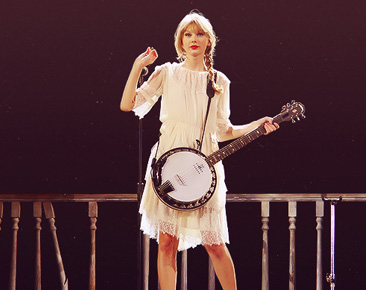
The 6 string banjo is sometimes called a banjitar. When we talk about six string banjos, we are normally talking about a banjo body with a guitar-looking neck. It’s missing the short drone string.
You’ll see people like Keith Urban or Taylor Swift playing these things. They were also played on some of Louis Armstrong’s early Hot Five recordings.
A banjitar is useful for those that already play guitar and don’t want to take the time to learn another instrument. They are tuned like a guitar (E A D G B E) and you can use a flatpick or fingerpicks. The advantage here is that all of your guitar chords are the same on the banjitar. This is why they are popular on studio recordings (it’s being played by people that are more guitar player than banjo player). The disadvantage is they will lack that twangy/country bluegrass sound if that is your goal.
There ARE six string banjos that exist that are 5-string banjos with an extra bass string. These 6-string banjos have the short drone string with five additional strings. Sonny Osborne played one on “Up this Hill and down” which you can hear here. I can’t say I’ve seen too many of these over the years, but they sound really cool.
Conclusion on Types of Banjos
Hopefully. after reading this guide, you have a better idea on what type of banjo you’d like to purchase. If you still don’t know, it’s hard to go wrong with the five-string banjo. It’s the most versatile and can be adapted to pretty much anything.
Please consider signing up for my BANJO JOURNEY NEWSLETTER. I’ll notify you when I post new articles and new products. I send out FREE TIPS occasionally as well.


