Guitar Arpeggio Exercises: Major

One of the keys to unlocking the guitar fingerboard are arpeggios. Today I’ll show you some basic arpeggio shapes laid out across the guitar strings.
Arpeggio simply means playing the notes of a chord one at a time instead of all at once. The notes within these arpeggios are called CHORD TONES.
If one knows the location of the various arpeggios on the fretboard, then they’ll be able to target these integral CHORD TONES for soloing and finding melodies. A great deal of melodies come straight out of the chord tones.
Major Arpeggio Patterns Guide For Guitar
Some things to be aware of as you play these patterns.
- Each one uses the fingering pattern- Middle-Index-Pinky.
- The arpeggio “shape” is the same going across the strings you just start on different frets.
Let’s start with a G major arpeggio. The notes are G-B-D, the 1-3-5 of a G major scale.
G maj Arpeggio Starting on 6th string
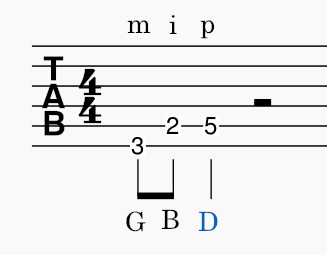
G maj Arpeggio Starting on 5th string

G maj Arpeggio Starting on 4th string
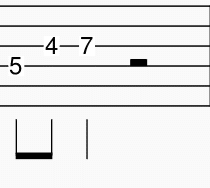
G maj Arpeggio Starting on 2nd string
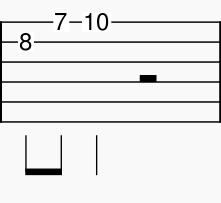
Did you Skip Something?
I did! I skipped the arpeggio starting on the 3rd string. Why? It does not follow the fingering patterns of the others. It looks like the following:
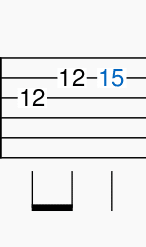
What I advise doing here is barring the third and second string with your index finger and reaching for the 15th fret with your pinky. I won’t use this in my following exercise; however, I do recommend playing separately.
Arpeggio Shapes are Moveable.
Understand that these shapes are ALL moveable. For example, if you want the A major arpeggio, move each one up two frets or a whole step. It’s that easy!
Full Arpeggio Exercise
Here is a guitar arpeggio exercise using the majority of the shapes. Start each sequence with your middle finger. This does require a bit of a quick shift after playing the 3rd note in each sequence. I think the fact they use the same finger pattern makes them easier to remember. You will want to practice this both ascending and descending. My advice is to play all of the notes using DOWN STROKES in the beginning until your left-hand becomes more automatic. Once you get the feel of it, try to use alternate picking (Down-Up-Down-Up).

I recommend naming the names of the notes you are playing as you are playing this exercise (G-B-D-G….etc). Once you really know this, you can practice playing the notes in random order. For example, B-G-D and so forth.
Check out my Guitar Triad article to learn more basic guitar fingerboard stuff!
If you’d like to learn more fingerboard theory please contact me, I give online guitar lessons via ZOOM. I can help you move away from just learning tune after tune.