Fingerboard Visualization For All Fretted Instruments – Part One
Today we’ll talk about visualizing intervals on the fingerboard and why they are important. We begin with the major 3rd interval. We begin with the major 3rd interval because it’s the first step within a major chord. When you’re improvising, the notes within the chord are the safest notes, so it’s a great place to start.
Knowing the feel of these distances on your fingerboard will help you move VERTICALLY through the fingerboard as opposed to being tied to little “scale boxes” in one place.
Your major chord is made up of 1-3-5 (G-B-D for G major). That 1-3 interval is exactly what we are learning, except we aren’t moving across the strings, we are staying on the same string for both notes.
What is a major 3rd interval?
Let’s start from G. Here are the notes chromatically from there (I’m using all sharps for ease of use).
G G# A A# B
B is a major 3rd away from G, but how many STEPS is it away.
It is FOUR STEPS, or four half-steps. That is the part you want to remember.
Let’s take a look at all of the Major 3rd possibilities starting from G on the 5-string banjo.
Banjo Major 3rd Intervals
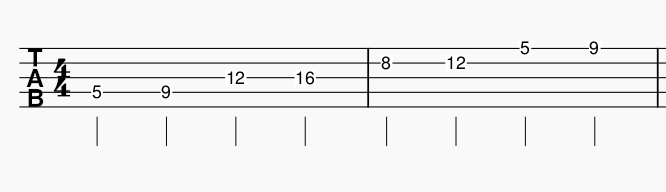
Each one of these is four frets apart (not counting the original note). However, they feel different. Why is this?
As you move up higher in frets, the distances between the notes shrink. The frets get closer together. Learning how to compensate for the shrinking distance as you move higher and further distance as you move lower is a skill you need to learn. Even people that play fretless instruments deal with this, you just can’t see it because of the lack of frets.
Further Interval Practice Ideas:
Try starting on different frets/notes and see how fast you can find the corresponding major 3rd interval on different strings in different spots. Perhaps even try starting really high up, like the 15th fret. Compare to starting on the 2nd fret. See the problem? The distances between the notes from an interval perspective are IDENTICAL. However, they feel completely different. This is something piano players don’t deal with (withstanding, the different feel between the white and black keys).
This exercise teaches you how to VERTICALLY visualize the major 3rd interval. This is important for shifting up and down the fingerboard If you are interested in learning the intervals HORIZONTALLY, you might be interested in my double stop worksheet that goes over it and many other ones.