New Release – The Pursuer
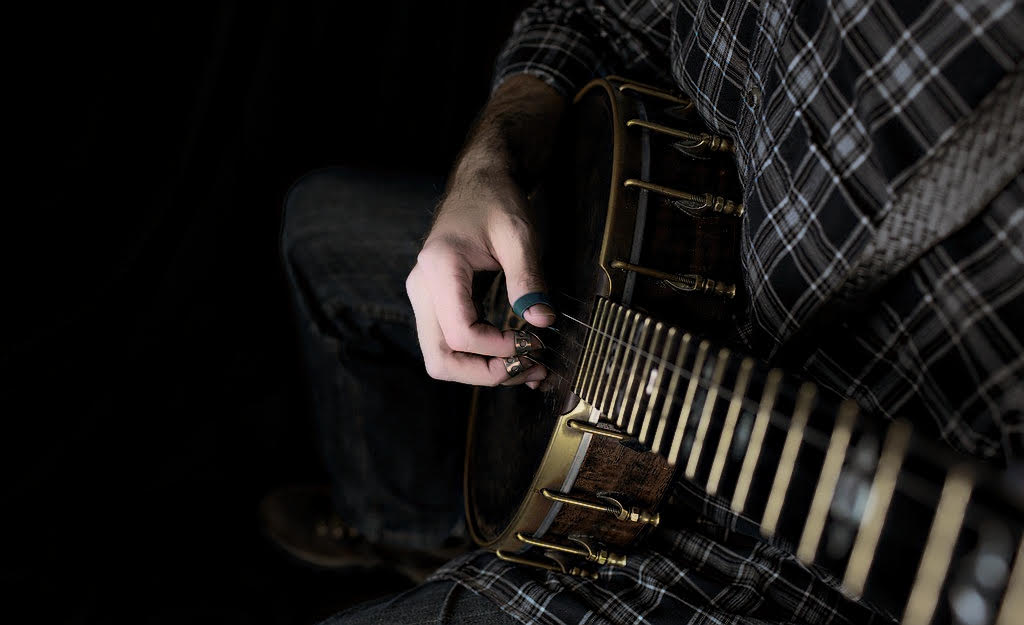
I recently finished up a new track entitled “The Pursuer.” The mood of this piece is dark folk, eerie, and perhaps haunting. I envisioned a type of relentless pursuing in my musical mind…a certain element of pacing. Perhaps something aimed for a murder-mystery
It’s available for purchase on my BandCamp website (the best place to support and find smaller artists). On Fridays, all proceeds from purchased tracks go to the artists. It’s also on Spotify, Apple Music, Amazon, and all digital platforms. Your streams and listening is greatly appreciated.
My Working Process
When I record, I like to capture spontaneity. Sometimes this is incredibly difficult, especially if it is something you’ve played a bazillion times. In the past, I have shut the mic down and quit for the day when I felt the music was losing this element.
For this track, I improvised a melodic fragment in C minor, bouncing around from it and Bb flat major at times. It was meant to be minimalist in note choice. However, any rhythms were fair game. I honestly planned very little of what I was about to play.
I pushed record and proceeded to improvise around this theme for 3-4 minutes. The majority of what you hear on the track is that first improvisation. However, after I was done, I immediately heard a different ending in my musical mind (one with more ‘racket’ and hits), so I decided to hit record and have another go at the ending. This is maybe the last minute and a half of the performance.
The track is a culmination of those two improvisations brought together. I didn’t punch in anything, use a click track, or anything like that. With solo banjo pieces, I don’t want to use a click track because the tempo should push and pull, like a classical piece. The tempo and rhythm is part of the improvisation. In fact, I’d say I approach the whole thing kind of more like a classical musician, except my part isn’t memorized.
Effects
Like most musical projects, I’m not sure where they are going until I start putting things down on the canvas. They then lead me a particular direction via their innate suggestions. Sometimes when I’m done, I’m like, “man, I had no idea I was getting into all of this!” I cant say I originally envisioned all of the effects (some of them I had never used before or knew about), but the more I thought about it, they would allow me to paint the picture I wanted to paint.
Reverb
I’m using a heavily modulated reverb with long decay times (Chromaverb for you Logic Pro users). There is nothing natural about it; that’s why you hear the ghastly tail ends at the end of the notes. I knew I wanted the reverb to kind of be otherworldly.
Echo
I’m enjoying the use of echo (and tape delay) on my banjo tracks as of late. I think it creates an underlying subtle rhythm that almost accompanies the original melody. The echo on this track was automated, meaning the majority of the time it’s not there. Only on certain notes did I want them to repeat back. The difficulty lies in adding enough to color the sound, but not so much it sounds like it stepped off of a spaceship!
Distortion
There are touches of distortion on the track. Once again, it’s automated as well. There are parts I wanted a more pristine/digital/clear sound. Most people associate distortion with electric rock guitars. However, distortion can add warmth and extra harmonics to sounds as well. When I first began the track, I had thought about it having more of a tape/analog sound (which innately has extra distortion). However, the clarity of the notes in the slower parts was too important so I backed off that idea with the processing.
Compression
I did have to do something I don’t like doing with this track-use a compressor. There were parts were I absolutely knocked the daylights out of my banjo with my right hand (as intended). That kind of put a ceiling on how loud I’d be able to make the track without some sort of compression.
The compressor helped give me a bit more headroom with the volume. The original dynamic range was extremely wide (almost 20). In other words, the difference between the loudest parts and quietest parts was extreme. Thus, I had no choice if I didn’t want people getting their ears knocked off near the end of the track. At the same time, it was a VCA compressor with only a ratio of 1:4:1. Extremely light. One thing I did learn from this experience is the next time I want a really loud/in your face banjo sound, I will probably play closer to normal volume and bring it up afterwards…that’ll make it a bit less challenging to deal with.
Please consider subscribing to my email newsletter (see the side or below if you’re on mobile). I’ll notify you of new music releases and blog posts.